'Lost' City of Atlantis
Can it be one of the weirdest places on Earth if no one knows where it is and it's actually just a legend? Let's go with yes — after all, many people are convinced that there really was a peaceful utopia that sunk beneath the sea in time immemorial, and they've tried to pinpoint it in spots all over the world. Even Google Earth once fed the legend with a data glitch that created a gridlike pattern on the ocean floor. Keen-eyed observers speculated that it might be the lost streets of Atlantis.
[Read More]
Bermuda Triangle
What secrets lurk in the triangle of ocean between Florida's southern tip, Bermuda and San Juan, Puerto Rico? The Bermuda triangle is said to gobble up ships and airplanes without a trace. Slight problem with the legend: Most of the "mysterious disappearances" cited by believers weren't mysterious at all, but occurred during storms or didn't even sink within the triangle's borders.
[Read More]
Area 51
Something strange is going on at Area 51 … or is it? This military based is about 80 miles northwest of Las Vegas. Its claim to fame is that it's supposedly the top-secret site where alien bodies and technology were taken after a UFO crash-landing in Roswell, New Mexico in 1947. While it's true the military base is secretive (most military bases are), many of the conspiracy claims surrounding Area 51 have been thoroughly debunked.
[Read More]
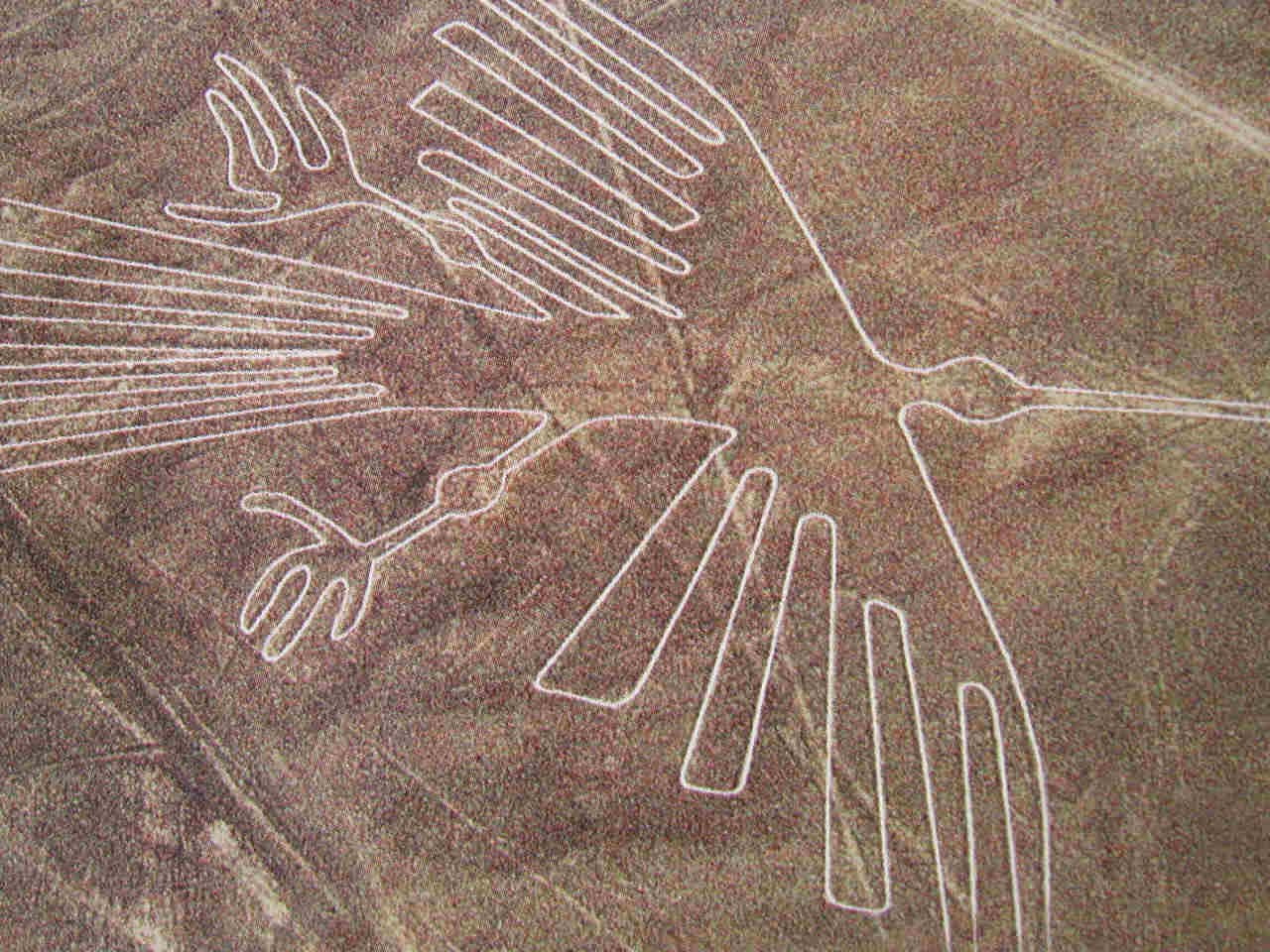
Nazca Lines
Atlantis may be a legend, but the mysterious Nazca lines are real. These enormous geoglyphs in arid coastal Peru depict spiders, monkeys, plants and other figures. They date back to about 500 B.C. but are best appreciated by air (though all can be seen from the ground). No one knows why the prehistoric Nazca culture went through the effort of making the geoglyphs, though they may have had a ritual role or linked up to constellations in the sky.
[Read More]
Stonehenge: About Mysterious Monument
What was the purpose of this ancient icon? A burial ground? A winter solstice monument? A UFO landing site?
Okay, it's probably not that last one. But Stonehenge's purpose does remain a mystery. The farmers and herders who built the structure starting 5,000 years ago continued to add to it over a period of 700 years. They left no written records behind, only a circle of striking stones near what is today Salisbury, England.
[Read More]
Teotihuacan: Ancient City of Pyramids
The great pyramid-filled city of Teotihuacan went into decline about 1,400 years ago and was left in such ruins that no one knows who its builders were or what they called their home. The Aztecs, who would later make pilgrimages to the site, gave it its modern name, which means "the place where the gods were created."
Teotihuacan was a major urban area. It covered about 8 square miles (20 square kilometers) and was likely home to 100,000 people, many living in apartment-like multi-family structures. But the city is best known for its expansive "Avenue of the Dead" and major pyramid complexes.
[Read More]
Angkor Wat: History of Ancient Temple
Among the largest religious monuments ever created, Angkor Wat stands out for its gorgeous towers and intricate artwork. The temple city, which sits in what is now Cambodia, was built between A.D. 1113 and 1150. Its towers are meant to elicit the mythological Hindu mountain Mount Meru, and the temple was originally built in honor of the Hindu god Vishnu. Several hundred years later, Angkor Wat was transformed into a Buddhist site.
[Read More]
Pyramids of Giza & the Sphinx
The trio of pyramids at Giza is so familiar that it can be easy to forget how unusual they really are. The Great Pyramid of Khufu was built between 2589 BC and 2504 BC, and reached a height of 481 feet (146 meters). Now consider this: Khufu's pyramid remained the tallest building in the world until the 14th century, when England's Lincoln Cathedral took the record.
Plenty of mystery remains about how ancient builders constructed the huge pyramids out of 2.5-ton stones.
[Read More]
Loch Ness Monster
Beautiful Loch Ness would be notable even without the monster sightings that made it a global name. The lake, which is in the Scottish Highlands, is the largest Scottish loch by volume. It gets as deep as 755 feet (230 m) and has a surface area of 21.8 square miles (56.4 square km).
Perhaps this mammoth size is part of what led to rumors of a mammoth beast lurking in the lake. The Loch Ness Monster first made headlines in 1933 in an article that suggested a disturbance in the lake's surface may have been a fight between ducks. It was enough to spur rumors, however, especially when a supposed photograph of a long-necked lake monster came out in 1934. (Decades later, the photographer admitted the famous photo was a hoax.)
[Read More]
Cahokia: North America's First City
The banks of the Mississippi in the Midwest aren't necessarily known for world-class cities (sorry, St. Louis). But between A.D. 1050 and A.D. 1200, a city flourished right across from what is today St. Louis that was larger than London in size.
Cahokia was spread over six square miles (16 square km) and was home to as many as 20,000 people. Modern development covers much of the site, but archaeologists have discovered that Cahokians drank caffeinated beverages and played a game known as "Chunkey." The city may have included a wooden temple and a wooden Stonehenge-like structure, perhaps important for keeping track of solstices and equinoxes.
[Read More]